
Creating Objects
When creating an Object, you'll configure various fields that control its behavior, organization, and data management. This guide explains how to create Objects and configure each setting in detail.
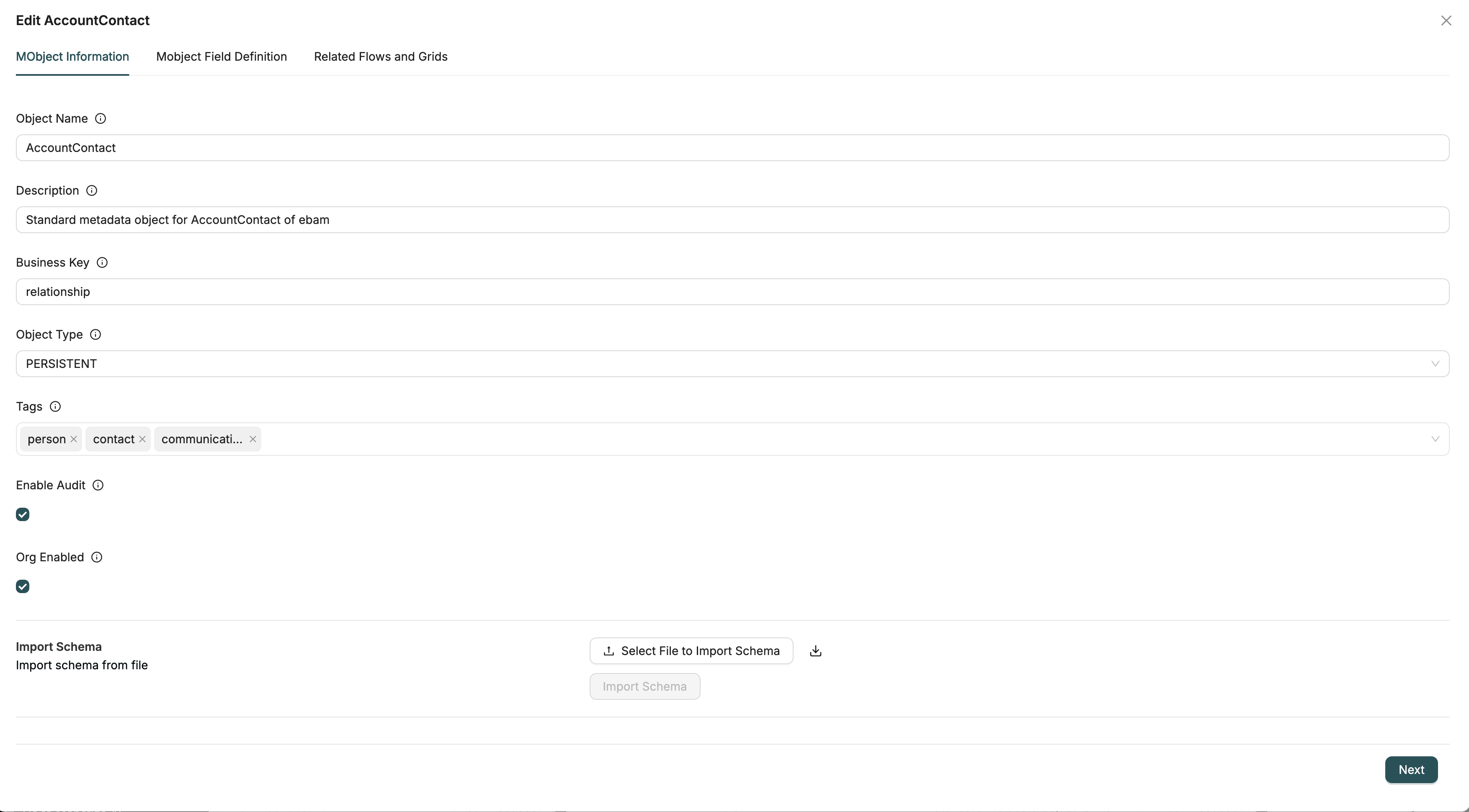
Required Fields
Object Name
The unique identifier for your Object. Must be unique across all Objects and cannot be changed after creation.
Requirements:
- Use descriptive, PascalCase names (e.g., "Customer", "Order", "Product")
- Use singular nouns (Customer, not Customers)
- Avoid special characters and spaces
Description
A human-readable description that explains what the Object represents and its purpose. Can be updated after creation. Keep it clear and concise (1-2 sentences).
Example: "Customer information and contact details for managing customer relationships and transactions"
Optional Fields
Business Key
A field name that serves as a unique identifier for display purposes. Used when displaying records in lookups, dropdowns, and related record views. Must reference a field that exists in your Object schema.
When to Use:
- When you have a natural unique identifier (email, product code, SKU)
- For better UX in lookup fields and related record displays
Example: email or customerNumber (Customer), sku or productCode (Product), orderNumber (Order)
Note: The business key field should ideally be unique or have a unique constraint in your schema.
Object Type
Defines the category and behavior of the Object. Each type has different characteristics and use cases.
| Type | Description | Use Case | Editable |
|---|---|---|---|
| PERSISTENT | Data persists permanently in the database | Customer records, orders, invoices, products | Yes |
| TRANSIENT | Temporary data, may be cleaned up | Workflow execution data, temporary calculations, session data | Yes |
| SYSTEM | System-managed objects, read-only | Internal system objects, core platform entities | No |
| STANDARD | Standard business objects | Predefined business entities | Yes |
| CUSTOM | User-defined custom objects | Custom business logic objects | Yes |
| EXTERNAL | External data sources | Objects synced from external databases or systems | Limited |
Default: PERSISTENT
Use PERSISTENT for most business data, TRANSIENT for temporary or workflow-specific data. SYSTEM objects are managed by the platform, and EXTERNAL objects are synced from external connections.
Tags
Labels for organizing and categorizing Objects. Multiple tags can be assigned to an Object. Tags are case-sensitive and help you filter, search, and group related objects.
Best Practices:
- Use consistent naming conventions (lowercase, kebab-case, or camelCase)
- Create meaningful categories (e.g., "customer", "sales", "inventory", "finance", "core", "integration")
- Keep tag names short and descriptive
Enable Audit
Enables audit trail tracking for all changes made to Data records. When enabled, all create, update, and delete operations are logged with who made the change, when, and what changed.
When to Enable:
- Important business data (customers, orders, financial records)
- When compliance or audit requirements exist
When to Disable:
- Temporary or transient data
- High-volume, low-value data
- When storage optimization is critical
Note: Audit trails consume additional storage. Enable only for objects where change tracking is necessary.
Org Enabled
Controls whether Data records are scoped to the organization (multi-tenant isolation). Default: true (enabled)
When enabled (default): Records are filtered by organization ID. Each organization only sees its own data. Use for customer-specific data, organization-specific configurations, and most business data.
When disabled: Records are shared across organizations. Use for shared reference data (countries, currencies, product catalogs), system-wide configurations, and global lookup tables.
Important: Changing this setting after creation may affect data access. Plan your multi-tenant strategy before creating Objects.
Import Schema
Import field definitions from an Excel (.xlsx, .xls) or CSV file instead of manually adding fields.
Supported Formats: Excel (.xlsx, .xls) and CSV (.csv)
File Format: The import file should contain columns: Name (required), Title, Description, Type, and Enum (for picklist fields, comma-separated).
Import Process:
- Click "Select File to Import Schema"
- Choose an Excel or CSV file
- Review the imported fields
- Click "Import Schema" to apply
Use the download icon to get a template file with the correct format. Useful for migrating schemas from other systems, bulk field creation, and standardizing field definitions across Objects.
Fields Summary
| Setting | Required | Default | Can Change After Creation |
|---|---|---|---|
| Object Name | Yes | - | No |
| Description | Yes | - | Yes |
| Business Key | No | - | Yes |
| Object Type | Yes | PERSISTENT | Limited |
| Tags | No | - | Yes |
| Enable Audit | No | false | Yes |
| Org Enabled | No | true | Yes (with caution) |
Best Practices
- Use clear, descriptive PascalCase names (singular nouns)
- Provide meaningful descriptions for maintainability
- Set business keys for better UX in lookups and displays
- Use consistent tagging strategy for organization
- Enable audit for important business data only
- Plan multi-tenant strategy before creation
- Choose the right Object Type based on data lifecycle
Related Introduction
- Field Types - Complete reference for all field types